

 Basket

 Made to Measure Campervan
Mattresses


What Is the Best Mattress for Me?

| Key Takeaways | |
|---|---|
| Choosing the Right Mattress Size |
|
| Finding the Right Tension for Your Sleeping Position |
|
| Best Mattresses for Back Pain |
|
| Best Mattresses for Allergies |
|
| Best Mattresses for Hot Sleepers |
|
| Trying a Mattress in Store |
|
Choosing a new mattress is all about finding one that will meet your unique needs. Your sleeping position, body type, and even whether you tend to sleep hot can all influence which mattress will give you the most comfortable night's sleep.
This guide explains the key factors that can affect how you sleep and which mattress is best suited to each one, helping you choose a bed that supports better sleep for years to come.
Choosing the Right Mattress Size
The first and most obvious consideration for a mattress is the size, which will be dictated by the size of your existing bed base or space in your bedroom. If you share a bed, then you will also want at least a double mattress to ensure you have enough room to sleep comfortably.
Standard UK mattress sizes include:
- Small Single 2'6" x 6'3" / 75cm x 190cm
- Single 3'0" x 6'3" / 90cm x 190cm
- Small Double 4'0" x 6'3" / 120cm x 190cm
- Double 4'6" x 6'3" / 135cm x 190cm
- King 5'0" x 6'6" / 150cm x 200cm
- Super King 6'0" x 6'6" / 180cm x 200cm
If you require something outside those sizes, such as for an antique bed frame or a caravan, we can also offer custom size mattresses made to your measurements.
For more information on how to measure for a new mattress, please refer to our measuring guide.
Finding the Right Tension for Your Sleeping Position
Different sleeping positions place pressure on different parts of the body. This will determine what mattress tension will be best for you, as you will need a different level of firmness depending on what part of the body needs supporting.
Side Sleepers
Side sleeping creates pressure around the shoulders and hips. A medium-soft mattress usually provides the best balance of pressure relief and support, allowing these areas to sink slightly while keeping the spine aligned.

Back Sleepers
Back sleepers generally benefit from a mattress that keeps the spine in a neutral position without allowing the hips to sink too deeply. A medium-firm mattress typically provides the right level of support.

Stomach Sleepers
Sleeping on your front places greater pressure on the lower back if the mattress is too soft. A firm mattress helps keep the hips elevated and encourages better spinal alignment throughout the night.

Combination Sleepers
If you move around during the night, then a true medium tension mattress is your best option. This is the best compromise, providing contouring for your side whilst maintaining support for your back as you move to different positions.

Best Mattresses for Back Pain
If you regularly wake with aches or lower back pain, your mattress may no longer be providing the support you need.
Orthopaedic mattresses are designed with a firmer support core to help maintain better spinal alignment while sleeping. They can be a good choice for people who prefer a firmer feel or require additional support for their back.
While a new mattress cannot treat medical conditions, replacing an old or unsupportive mattress can often improve sleeping comfort. Persistent or severe back pain should always be assessed by a healthcare professional.
Best Mattresses for Allergies
If you suffer from allergies such as asthma, hay-fever or sensitive skin, it’s important to find a mattress that will minimise the presence of dust and allergens. By choosing a mattress that is dust resistant and breathable, you can enjoy a restful sleep, free from irritation
- Foam Mattresses have a dense structure that helps prevent dust mite build-up because there are fewer spaces for allergens to accumulate.
- Natural fillings such as wool, cotton and latex are naturally resistant to dust mites and help regulate moisture. However, if you have allergies to specific natural materials, these fillings may not be the best option for you.
- Hypoallergenic Mattresses are specifically constructed to be breathable and include fillings that are resistant to allergens.
Using a mattress protector and regularly cleaning your bedding can also help reduce allergens regardless of which mattress you choose.
Best Mattresses for Hot Sleepers
Overheating is one of the most common reasons people struggle to stay asleep. This can be made worse by some mattresses, like traditional memory foam, that trap heat and warm up throughout the night.
Cooling mattresses are designed to improve airflow and reduce heat retention through breathable fillings, ventilated foam, or hybrid constructions that allow warm air to escape more easily.
If you often wake feeling too warm, choosing a cooling mattress can help create a more comfortable sleeping environment throughout the year.
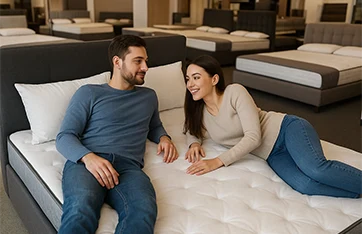
Trying a Mattress In-Store
While this guide offers helpful tips on what to look for in a mattress, it is ultimately down to your personal preferences. That’s why the best way to truly know if a mattress is right for you is to try it before you buy to see how it feels.
If you're local, you're welcome to visit our Stockton-on-Tees or Darlington showroom, where our experienced team can help you compare different mattress types and recommend options based on your sleeping position, comfort preferences and budget.
You can also call 01642 613684 or email sales@linthorpebeds.co.uk if you have any questions or want further advice on which mattress you need.
More from Linthorpe Beds


What Our Customers Have To Say About Us


Our Stores


LinthorpeBeds Newsletter